

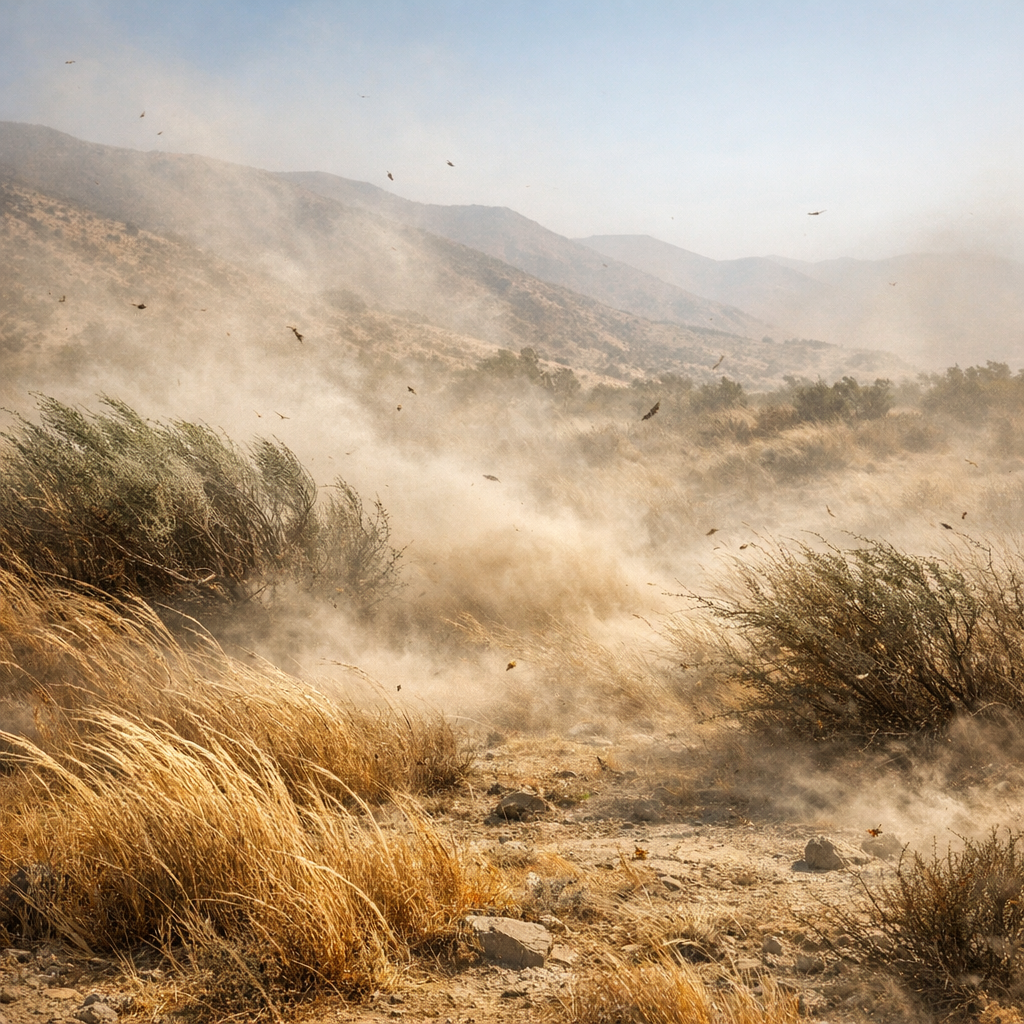
Living in Santa Ana means experiencing a climate I like to call “richly complex”: our summers are hot and dry, winters mild with moderate rain, and then there are the Santa Ana winds—powerful forces shaping our seasons, environment, and even our air.
What Are Santa Ana Winds?
Santa Ana winds are strong, dry offshore winds that develop when high pressure in the Great Basin pushes air toward the coast, while lower pressure off the Southern California coast pulls that air over our mountains through passes and canyons. As this air descends, it compresses and heats up, becoming hot, dry, and gusty. These conditions are most frequent from fall through early spring. (Synoptic high pressure + downslope warming)
Hot vs. Cold Santa Anas
These winds come in two major “flavors.” Hot Santa Anas bring high coastal temperatures and last longer, drying out vegetation. Cold Santa Anas tend to produce stronger wind speeds but cooler coastal air. (Hot SAWs often precede wildfire growth; cold SAWs occur under different pressure patterns inland.)
Why They Matter for Our City
Wildfire Risk
When vegetation is already dry—especially at the end of summer or during dry periods—Santa Ana winds can rapidly spread any spark. Flames travel faster, embers carry further, and fires ignited in foothills can cross into suburban areas. Fire danger spikes under hot, dry, windy conditions.
Air Quality and Health
These winds sweep dust, pollen, and pollutants from inland areas toward the coast. Early on or as Santa Anas weaken, air quality often worsens. Low humidity also dries mucous membranes and irritates skin and eyes. Be especially mindful if you have asthma or other respiratory conditions.
How Our Seasons Shift Because of Them
Although Santa Ana winds are strongest from October through February, shifts in climate are changing how often and how intensely they occur. Some research suggests they may become less frequent overall due to warming of interior regions, even as individual events may bring more extreme drying when they do happen. Drier winters and more intense hot Santa Anas could make fire seasons longer in effect.
What We Can Do Locally
- Monitor weather and air‐quality alerts especially in fall and winter.
- Clear dry brush around homes and obey local fire restrictions.
- Use air filters indoors when air quality drops; avoid strenuous outdoor activity during peak wind and dry spells.
- Stay informed about changing seasonal norms in rainfall and temperature—they’ll affect water planning, landscaping, and wildfire preparedness.
Here in Santa Ana, understanding the pattern of the wind, the seasons, and our environment helps us protect ourselves, our homes, and what makes our city special.